Versowood's Finland's largest pellet factory turns sawmill by-products into energy
During the past year, Finland’s largest pellet factory has been built next to the Vierumäki sawmill. The plant, which utilises the by-product streams of sawmilling, maximises the use of raw materials and produces domestic renewable fuel for heating Finnish homes.
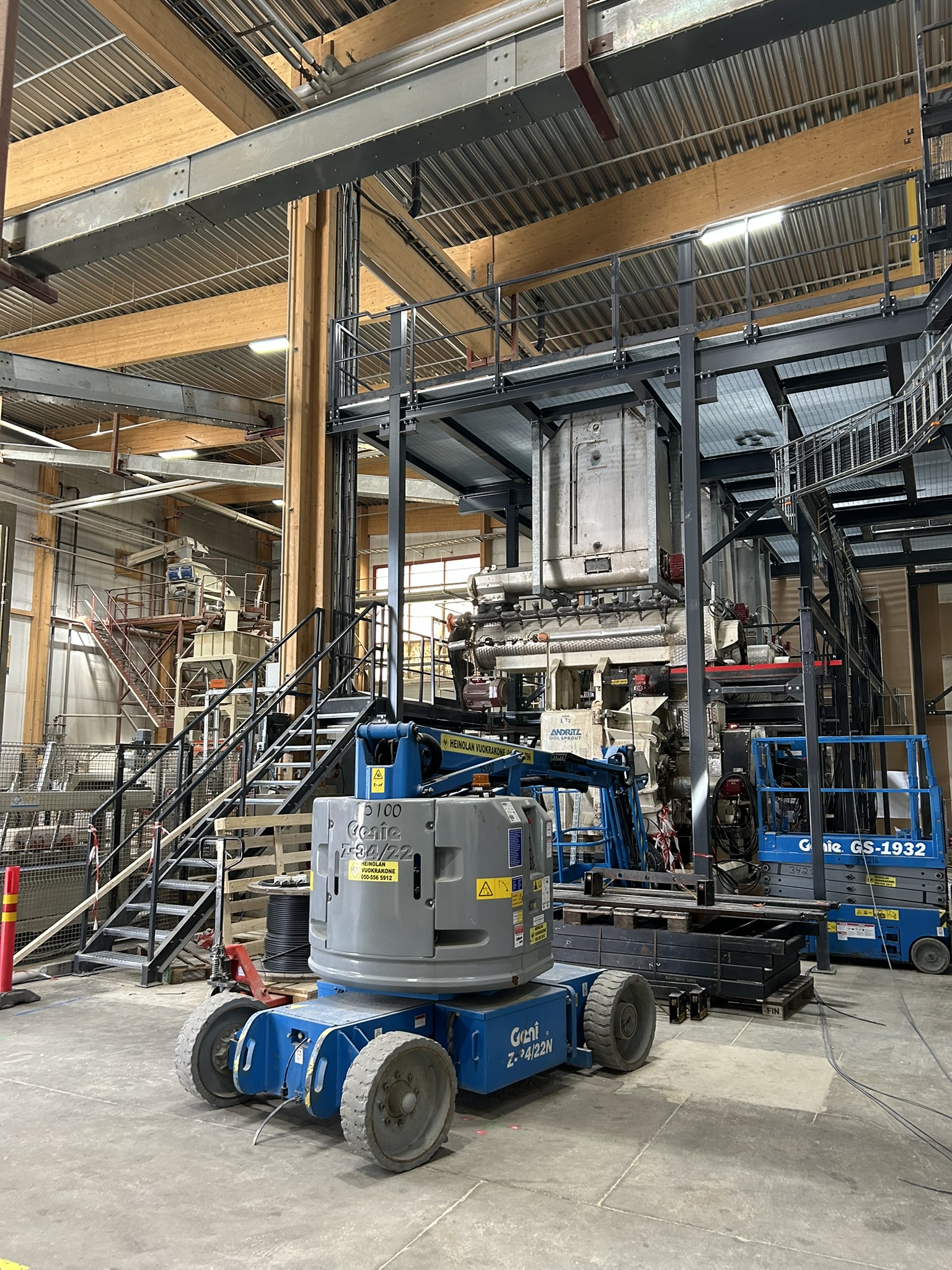
In 2023, Versowood acquired Vapo’s pellet factory in Turenki. At the same time, a letter of intent was concluded on the purchase of Vilppula’s machines, which was realised in 2024 when Vapo made the decision to close the factory. The deal included four pellet presses and a belt dryer, and plans were made to transfer them to the Vierumäki plot. In the initial phase, the equipment was imaged in 3D to understand the space requirements and positioning.
“Although the 3D models helped to understand the size of the machines and the available space, it was surprisingly challenging to figure out the layout. We wanted the process to be as smooth as possible,” says Taru Lampiselkä, Production Manager at Versowood.
The disassembly of the machines began in spring 2025, and the construction work also began at the same time. In addition to Lampiselkä, who was responsible for the transfer of the machines, the project team included Electrical and Automation Manager Simo Oksanen, who was responsible for the transfer of electricity and automation, Project Manager Tuomas Huuskonen, who managed the construction work and tendering, and Operations Manager Arttu Särkkä, who was responsible for the flue gas scrubber and the new heat lines.
Finding skilled contractors for disassembling, transferring and installing machinery was not exactly straightforward. According to Lampiselkä, the transfer of the machines was ultimately divided among four different contractor companies by process area, and two contractors were needed for the electrical and automation transfer and modification. The construction work in Vierumäki was previously managed by Varte, which built Versowood’s head office.
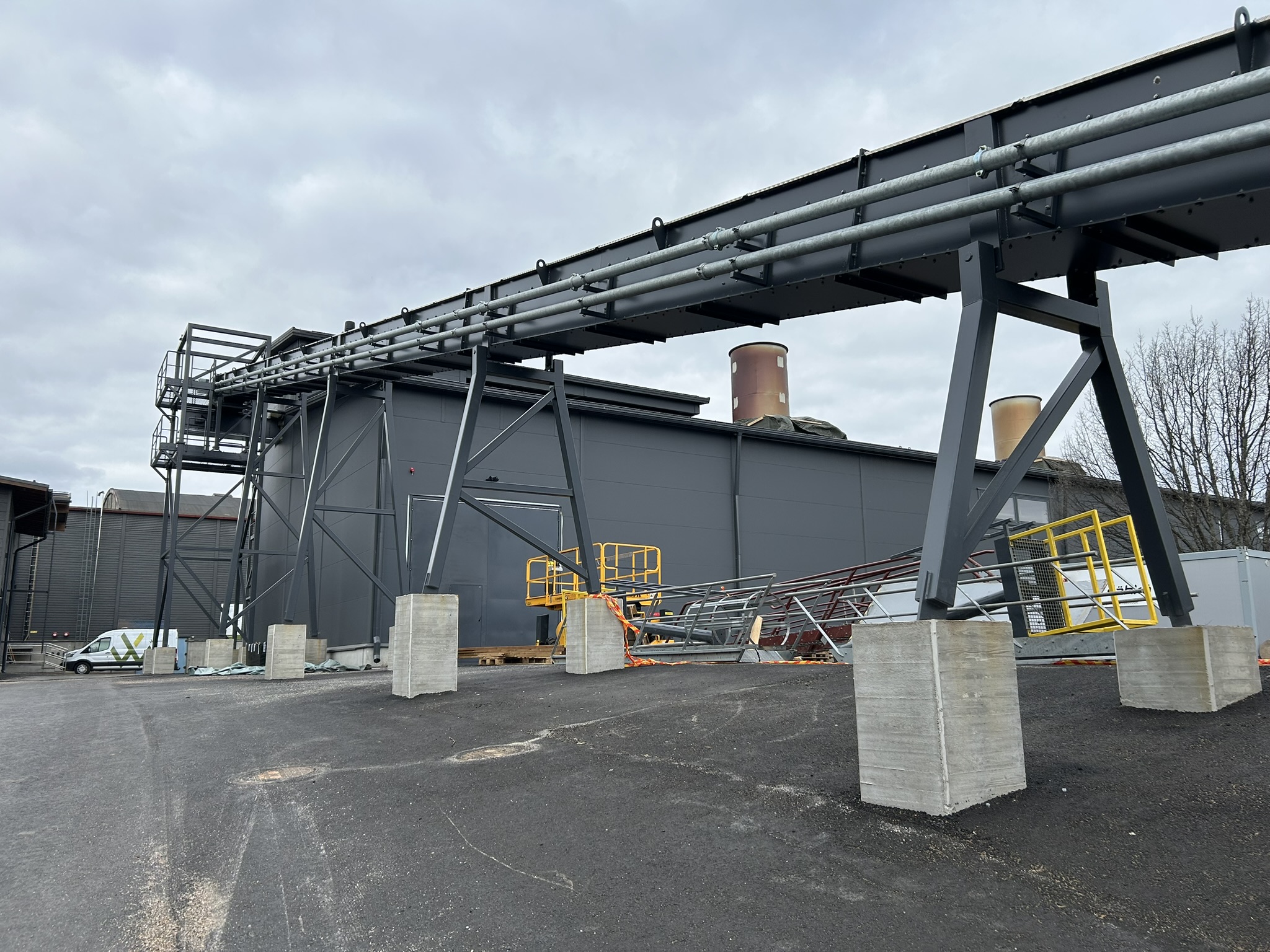
“Everything could not be moved or installed as it was, which meant we had to do build new things and order completely new parts. In addition to conveyors, various kinds of platforms and buildings, we needed a new sawdust silo around the internal parts from Vilppula.”
A gigantic puzzle
One challenge has been to fit the different parts together. During the summer and autumn of 2025, nearly 80 truck loads worth of aircraft parts and equipment arrived at Vierumäki, some as demanding special transports. The logistics and storage of the parts on the plot and the installation work while the pellet plant is running at the same time have required both careful planning and problem-solving skills.
“Everything’s been new, and there’s no manual for piecing together a puzzle such as this one. On the other hand, it’s also been a great thing about the project,” says Lampiselkä.
Even though it has been challenging to find solutions at times, Lampiselkä considers it important that the value in the old machines has been identified and the decision has been made to utilise the existing ones instead of replacing them.
“I’m glad that these fully functional devices weren’t deemed disposable and discarded as metal waste.”
The installations have continued from autumn 2025 through winter and until spring 2026. The project is scheduled to be started up and tested during the coming summer, and all presses are scheduled to be in production in the autumn.
Own raw material ensures security of supply
The dry by-product streams of the Vierumäki unit have previously been used as raw material for pellets, but with the belt dryer, the raw material base expands considerably. The capacity of the dryer is high, as is its heat requirements.
“In Vierumäki, there are both 10 and 14 MW boilers that use bark as fuel. The flue gas scrubber installed in them purifies the moist flue gas, and going forward, the recovered heat will be directed to be used by the belt dryer,” says Lampiselkä.
Thanks to the belt dryer, production will shift from the previous six-day cycle to a seven-day cycle. The doubling of the number of presses, on the other hand, enables better preventive maintenance and gives flexibility in production.
When the plant starts up, Vierumäki’s pellet capacity will double to approximately 100,000 tonnes, raising the entire Group’s capacity to over 150,000 tonnes. As for uses for the increased production volumes, Lampiselkä mentions large heating plants that use pellets, among others.
“We believe that our strength as a fuel supplier is, above all, security of supply. Our large capacity and, for example, the fact that we’re not dependent on third-party sawmilling, as the raw material comes from our own production, ensures the availability of pellets all year round.”